
Health & Wellness
Heart Disease: Types, Symptoms, Causes & Treatment
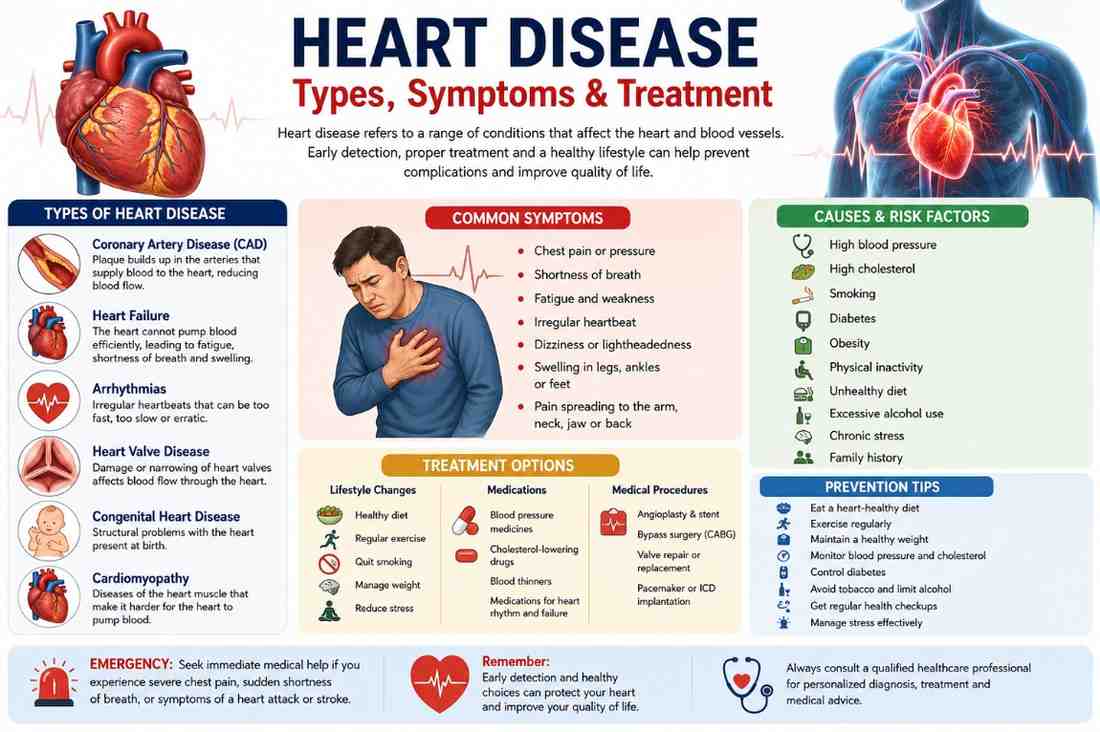
Jul
Introduction
Heart disease is one of the leading causes of illness and death worldwide. The term refers to a group of conditions that affect the heart and blood vessels, including coronary artery disease, heart failure, arrhythmias, and heart valve disorders. Early detection, healthy lifestyle choices, and appropriate medical care can significantly reduce the risk of complications.
Understanding heart disease, its warning signs, and available treatment options empowers individuals to take better care of their cardiovascular health.
What Is Heart Disease?
Heart disease refers to a variety of conditions that affect how the heart functions. Some conditions develop gradually over many years, while others may occur suddenly.
Common forms of heart disease include:
- Coronary artery disease
- Heart failure
- Arrhythmias (irregular heartbeat)
- Heart valve disease
- Congenital Cardiovascular Disease
- Cardiomyopathy
- Peripheral artery disease
Types of Heart Disease
1. Coronary Artery Disease (CAD)
Coronary artery disease occurs when plaque builds up inside the arteries supplying blood to the heart muscle. Reduced blood flow may increase the risk of chest pain (angina) or heart attack.
Common symptoms include:
- Chest discomfort
- Shortness of breath
- Fatigue during physical activity
2. Heart Failure
Heart failure does not mean the heart has stopped working. Instead, it means the heart cannot pump blood efficiently.
Symptoms include:
- Swelling in the legs and ankles
- Difficulty breathing
- Persistent fatigue
- Rapid weight gain due to fluid retention
3. Arrhythmias
Arrhythmias are abnormal heart rhythms that may cause the heart to beat too fast, too slowly, or irregularly.
Possible symptoms include:
- Heart palpitations
- Dizziness
- Fainting
- Chest discomfort
4. Heart Valve Disease
Heart valves regulate blood flow through the heart. Damage or narrowing of these valves may affect circulation.
Symptoms may include:
- Fatigue
- Shortness of breath
- Swollen ankles
- Heart murmur
5. Congenital Heart Disease
Congenital Cardiovascular Disease refers to structural heart abnormalities present at birth. Severity varies depending on the specific condition.
6. Cardiomyopathy
Cardiomyopathy affects the heart muscle, making it more difficult for the heart to pump blood effectively.
Common Symptoms of Cardiovascular Disease
Symptoms vary depending on the specific condition but may include:
- Chest pain or pressure
- Shortness of breath
- Fatigue
- Heart palpitations
- Dizziness
- Swelling in the legs
- Pain spreading to the arm, neck, jaw, or back
- Fainting
Women and older adults may experience symptoms differently than men.
Causes of Heart Disease
Several factors contribute to Heart Conditions, including:
- High blood pressure
- High cholesterol
- Smoking
- Diabetes
- Obesity
- Physical inactivity
- Unhealthy diet
- Excessive alcohol use
- Chronic stress
- Family history of Heart Conditions
- Increasing age
Risk Factors
Your risk may increase if you have:
- High blood pressure
- Elevated LDL cholesterol
- Diabetes
- Smoking history
- Obesity
- Sedentary lifestyle
- Sleep apnea
- Chronic kidney disease
- Family history of cardiovascular disease
Diagnosis
Healthcare professionals may recommend:
- Physical examination
- Blood pressure measurement
- Blood tests
- Electrocardiogram (ECG/EKG)
- Echocardiogram
- Stress testing
- Cardiac CT or MRI
- Coronary angiography (when indicated)
Treatment Options
Treatment depends on the underlying condition and individual health needs.
Options may include:
Lifestyle Changes
- Heart-healthy diet
- Regular exercise
- Smoking cessation
- Weight management
- Stress reduction
- Limiting alcohol intake
Medications
Depending on the diagnosis, healthcare professionals may prescribe medications such as:
- Blood pressure medicines
- Cholesterol-lowering medications
- Blood thinners (when appropriate)
- Antiarrhythmic medications
- Other medications based on individual needs
Medical Procedures
Some people may require procedures such as:
- Angioplasty
- Coronary artery bypass surgery (CABG)
- Heart valve repair or replacement
- Pacemaker implantation
- Implantable cardioverter-defibrillator (ICD)
Treatment decisions should always be made with a qualified healthcare professional.
Prevention Tips
Many forms of Heart Conditions can be prevented or managed by:
- Eating plenty of fruits and vegetables
- Choosing whole grains
- Limiting saturated fat, trans fat, and sodium
- Exercising regularly
- Maintaining a healthy weight
- Managing blood pressure and cholesterol
- Controlling diabetes
- Avoiding tobacco products
- Managing stress
- Getting regular medical checkups
Heart-Healthy Foods
Foods that support cardiovascular health include:
- Oats
- Salmon
- Nuts
- Olive oil
- Berries
- Leafy green vegetables
- Beans
- Avocados
- Whole grains
When to Seek Emergency Medical Care
Seek immediate medical attention if you experience:
- Severe chest pain
- Sudden shortness of breath
- Pain radiating to the arm or jaw
- Loss of consciousness
- Symptoms of a heart attack or stroke
Early treatment can be life-saving.
Frequently Asked Questions
What is the most common type of heart disease?
Coronary artery disease is one of the most common forms of heart disease.
Can heart disease be prevented?
Many risk factors can be reduced through healthy lifestyle choices and regular medical care.
What are the early symptoms of Cardiovascular Disease?
Symptoms may include chest discomfort, fatigue, shortness of breath, and heart palpitations, though some people have no symptoms until the disease is advanced.
Does exercise help prevent heart disease?
Regular physical activity is associated with improved cardiovascular health and can reduce the risk of many heart-related conditions.
Conclusion
It’s includes several conditions that affect the heart and blood vessels. Recognizing symptoms early, managing risk factors, and working with healthcare professionals can help improve long-term heart health. Adopting healthy habits – such as eating a balanced diet, staying active, avoiding tobacco, and attending routine medical checkups – plays an important role in preventing and managing cardiovascular disease.
