
Health & Wellness
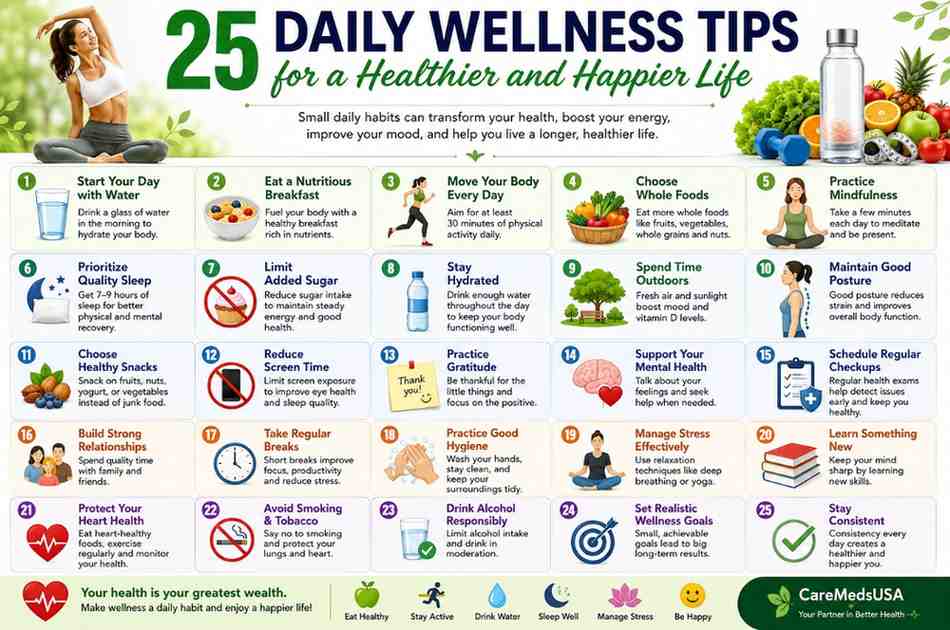
25 Daily Wellness Tips for a Healthier and Happier Life
Jul
Living a healthy life doesn’t require drastic changes or complicated routines. Small, consistent habits can make a significant difference to your physical health, mental well-being, and overall quality of life. These Daily Wellness Tips are designed to help you build healthier routines that support long-term wellness, improve energy levels, reduce stress, and encourage a happier lifestyle.
At CareMedsUSA, we believe that preventive care and healthy habits are the foundation of lifelong wellness. Whether you’re just beginning your wellness journey or looking to improve your daily routine, these practical tips can help you take positive steps every day.
For more health-related articles, visit our: Health & Wellness Resource Center.
Table of Contents
- Start Your Day with Water
- Eat a Nutritious Breakfast
- Move Your Body Every Day
- Choose Whole Foods
- Practice Mindfulness
- Prioritize Quality Sleep
- Limit Added Sugar
- Stay Hydrated
- Spend Time Outdoors
- Maintain Good Posture
- Healthy Snacking
- Reduce Screen Time
- Practice Gratitude
- Support Your Mental Health
- Schedule Preventive Checkups
- Build Strong Relationships
- Take Regular Breaks
- Practice Good Hygiene
- Manage Stress Effectively
- Learn Something New
- Protect Your Heart Health
- Avoid Smoking
- Limit Alcohol Consumption
- Set Realistic Wellness Goals
- Stay Consistent
1. Daily Wellness Tips: Start Your Day with Water
One of the simplest Daily Wellness Tips is to drink a glass of water soon after waking up. Hydration supports digestion, circulation, temperature regulation, and overall body function. Starting your morning with water may also help replace fluids lost overnight.
- Drink a full glass of water after waking.
- Carry a reusable water bottle.
- Increase water intake during hot weather or physical activity.
2. Daily Wellness Tips for a Healthy Breakfast
A balanced breakfast provides energy for the day ahead and helps support concentration and productivity. Include foods rich in fiber, protein, and healthy fats.
Healthy breakfast ideas include:
- Oatmeal with berries.
- Whole-grain toast with eggs.
- Greek yogurt with fruit.
- Smoothies made with fresh vegetables and fruit.
3. Daily Wellness Tips to Stay Active Every Day
Regular physical activity supports heart health, muscle strength, flexibility, and emotional well-being. You don’t need an intense workout every day—walking, stretching, cycling, or yoga can all contribute to a healthier lifestyle.
- Walk for 30 minutes.
- Use the stairs instead of the elevator.
- Stretch during work breaks.
- Find activities you genuinely enjoy.
4. Daily Wellness Tips for Better Nutrition
Whole foods such as fruits, vegetables, whole grains, legumes, nuts, and lean proteins provide essential nutrients that support overall wellness. Reducing highly processed foods may help improve long-term health.
- Eat more colorful vegetables.
- Choose whole grains over refined grains.
- Include healthy protein sources.
- Limit highly processed snacks.
5. Daily Wellness Tips to Practice Mindfulness
Mindfulness encourages you to focus on the present moment and may help reduce stress, improve concentration, and support emotional well-being.
- Spend five minutes practicing deep breathing.
- Meditate regularly.
- Reduce distractions during meals.
- Practice gratitude daily.
6. Daily Wellness Tips for Better Sleep
Sleep is essential for physical recovery, immune function, memory, and mental health. Adults generally benefit from 7–9 hours of quality sleep each night.
- Keep a regular sleep schedule.
- Avoid caffeine late in the day.
- Limit screen use before bedtime.
- Create a comfortable sleep environment.
7. Daily Wellness Tips to Reduce Sugar Intake
Reducing foods and drinks high in added sugar may support healthy weight management and overall health. Read nutrition labels and choose naturally sweet foods such as fruit whenever possible.
8. Daily Wellness Tips for Staying Hydrated
Hydration supports nearly every function in the body. Water needs vary depending on age, climate, activity level, and individual health conditions.
- Drink water regularly.
- Eat water-rich fruits and vegetables.
- Monitor hydration during exercise.
9. Daily Wellness Tips for Outdoor Activities
Fresh air and outdoor activity can contribute to improved mood, increased physical activity, and reduced stress. Even a short walk outside may provide meaningful benefits.
10. Daily Wellness Tips to Improve Posture
Proper posture may help reduce muscle strain and support spinal health. Whether sitting at a desk or standing for long periods, maintaining good posture is an important wellness habit.
- Keep your shoulders relaxed.
- Adjust your workstation ergonomically.
- Take movement breaks every hour.
- Strengthen your core muscles through regular exercise.
Continue Your Wellness Journey
Developing healthy habits takes time, consistency, and patience. These first ten Daily Wellness Tips provide a strong foundation for improving both physical and mental well-being.
Continue exploring trusted health information at:
11. Choose Healthy Snacks
Healthy snacks can help maintain your energy levels between meals while providing important nutrients. Instead of processed snacks high in sugar or unhealthy fats, choose nutrient-rich options that support your wellness goals.
Healthy snack ideas include:
- Fresh fruits
- Mixed nuts (unsalted)
- Greek yogurt
- Carrot and cucumber sticks
- Hummus with whole-grain crackers
- Apple slices with peanut butter
12. Reduce Screen Time
Many people spend several hours each day looking at digital screens. Excessive screen time may contribute to eye strain, poor posture, reduced physical activity, and disrupted sleep patterns.
- Follow the 20-20-20 rule for eye health.
- Take regular breaks from your computer.
- Limit unnecessary social media browsing.
- Avoid screens at least one hour before bedtime.
13. Practice Gratitude Every Day
Practicing gratitude encourages a positive mindset and may improve emotional well-being. Taking a few moments each day to appreciate positive experiences can reduce stress and promote happiness.
- Write three things you’re thankful for.
- Celebrate small achievements.
- Express appreciation to family and friends.
- Keep a gratitude journal.
14. Take Care of Your Mental Well-Being
Mental wellness is an important part of overall health. Paying attention to your emotional well-being can improve relationships, productivity, and quality of life.
Simple ways to support mental health include:
- Talking with trusted friends or family.
- Practicing relaxation techniques.
- Seeking professional support when needed.
- Spending time doing hobbies you enjoy.
15. Schedule Regular Health Checkups
Routine health checkups help detect potential health concerns early and provide an opportunity to discuss preventive care with your healthcare provider.
- Monitor blood pressure.
- Check cholesterol levels.
- Maintain recommended vaccinations.
- Attend age-appropriate health screenings.
Preventive healthcare plays an important role in maintaining long-term wellness.
16. Build Strong Social Connections
Healthy relationships contribute to emotional resilience and overall happiness. Spending quality time with supportive family members and friends can reduce stress and improve mental health.
- Stay connected with loved ones.
- Join community activities.
- Volunteer when possible.
- Practice active listening.
17. Take Short Breaks During the Day
Whether you’re working at a desk or studying, taking regular breaks can improve concentration, reduce fatigue, and support better posture.
- Stand up every hour.
- Stretch your muscles.
- Walk around for a few minutes.
- Rest your eyes from digital screens.
18. Practice Good Personal Hygiene
Maintaining good hygiene helps reduce the spread of germs and supports overall health.
- Wash your hands regularly.
- Brush and floss your teeth daily.
- Keep your living environment clean.
- Follow food safety practices.
19. Manage Stress in Healthy Ways
Stress is a normal part of life, but chronic stress may affect both physical and mental health. Developing healthy coping strategies can improve resilience and overall well-being.
Healthy stress-management techniques include:
- Deep breathing exercises.
- Yoga or stretching.
- Meditation.
- Listening to music.
- Spending time outdoors.
- Reading a good book.
20. Continue Learning and Growing
Lifelong learning keeps your mind active and engaged. Learning new skills may improve confidence, creativity, and cognitive health.
Ideas include:
- Read books regularly.
- Take online courses.
- Learn a new language.
- Develop a new hobby.
- Attend educational workshops.
Healthy Habits Create Lasting Results
Building a healthier lifestyle doesn’t happen overnight. Consistently applying these Daily Wellness Tips can help you improve your physical health, emotional well-being, and overall quality of life over time.
If you’re looking for more evidence-based wellness information, explore our growing collection of healthcare articles and educational resources.
21. Protect Your Heart Health
Your heart works continuously to supply oxygen and nutrients throughout your body. Supporting cardiovascular health through healthy lifestyle choices can reduce the risk of chronic health conditions and improve overall well-being.
- Eat a heart-friendly diet rich in fruits, vegetables, and whole grains.
- Stay physically active for at least 150 minutes each week.
- Monitor your blood pressure and cholesterol regularly.
- Maintain a healthy body weight.
- Follow your healthcare provider’s recommendations.
22. Avoid Smoking and Tobacco Products
Avoiding tobacco products is one of the most important steps you can take to protect your long-term health. Smoking increases the risk of numerous health conditions affecting the heart, lungs, and blood vessels.
If you currently smoke, consider speaking with a qualified healthcare professional about evidence-based strategies and support programs that may help you quit.
23. Drink Alcohol Responsibly
If you choose to consume alcohol, moderation is important. Excessive alcohol intake may negatively affect the liver, heart, blood pressure, sleep quality, and overall health.
Choosing alcohol-free days during the week and following public health recommendations can contribute to a healthier lifestyle.
24. Set Realistic Wellness Goals
Healthy habits are easier to maintain when goals are realistic and achievable. Rather than trying to change everything at once, focus on one small improvement each week.
Examples include:
- Walking 20–30 minutes each day.
- Adding one extra serving of vegetables to your meals.
- Drinking more water.
- Getting to bed 30 minutes earlier.
- Practicing mindfulness for five minutes daily.
25. Stay Consistent with Your Healthy Routine
The most effective wellness habits are the ones you can maintain over time. Consistency often has a greater impact than making dramatic short-term changes.
Celebrate your progress, learn from setbacks, and remember that every healthy decision contributes to your long-term well-being.
Daily Wellness Tips Frequently Asked Questions
1. What are daily wellness tips?
Daily wellness tips are healthy habits that support physical health, mental well-being, emotional balance, and overall quality of life when practiced consistently.
2. How many wellness habits should I start with?
It’s often easier to begin with one or two simple habits and gradually build a sustainable routine over time.
3. Why is hydration important?
Proper hydration supports digestion, circulation, temperature regulation, joint function, and many other essential processes in the body.
4. How much physical activity is recommended?
Many health organizations recommend that adults aim for at least 150 minutes of moderate-intensity physical activity each week, along with muscle-strengthening activities on two or more days.
5. Why is quality sleep important?
Good sleep supports memory, immune function, emotional well-being, and physical recovery.
6. Can healthy habits improve mental well-being?
Healthy routines such as regular exercise, balanced nutrition, mindfulness, quality sleep, and social connections can contribute to improved emotional well-being.
7. How can I reduce daily stress?
Deep breathing, meditation, regular exercise, spending time outdoors, hobbies, and maintaining supportive relationships are common ways to manage stress.
8. Are preventive health checkups necessary?
Regular health checkups can help identify potential health concerns early and support informed discussions with your healthcare provider.
9. What foods support overall wellness?
A balanced eating pattern that includes vegetables, fruits, whole grains, lean proteins, legumes, nuts, seeds, and healthy fats supports overall health.
10. Where can I learn more about healthy living?
You can explore additional educational resources through our
Health & Wellness section, where we regularly publish articles covering nutrition, preventive care, healthy habits, and lifestyle topics.
Trusted Health Resources
For additional evidence-based health information, consider visiting these organizations:
- World Health Organization (WHO)
- Centers for Disease Control and Prevention (CDC)
- MedlinePlus
- National Heart, Lung, and Blood Institute (NHLBI)
Conclusion: Your Daily Wellness Tips
Healthy living is built on small, consistent choices made every day. By following these Daily Wellness Tips, you can develop habits that support your physical health, emotional well-being, and overall quality of life. Whether your goal is to improve your diet, become more active, sleep better, or manage stress more effectively, every positive step contributes to long-term wellness.
At CareMedsUSA, we are committed to providing reliable health education, wellness resources, and practical lifestyle guidance. Explore our website for more informative articles, healthcare resources, and wellness insights designed to help you make informed decisions every day.
Continue your wellness journey by visiting our
Health & Wellness resource center for more expert articles and healthy living tips.
Medical Disclaimer
This article is intended for educational and informational purposes only. It should not be considered medical advice or a substitute for professional diagnosis or treatment. Always consult a qualified healthcare professional regarding any medical concerns, medications, or treatment decisions.
