
Health & Wellness, Pharmacy Guide, Prescription Information
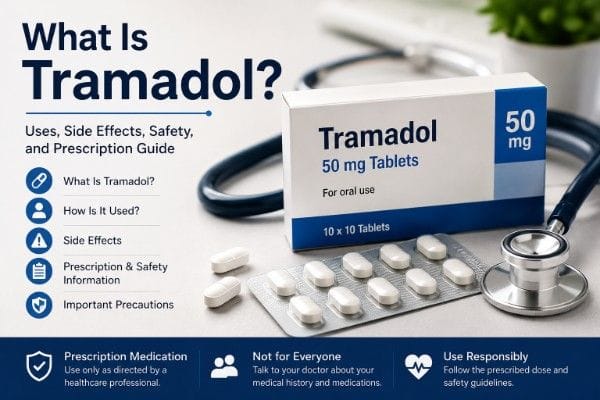
What Is Tramadol? Uses, Side Effects, Safety Information, and Prescription Guide
Jul
What Is Tramadol? Uses, Side Effects, Safety Information, and Prescription Guide
What Is Tramadol?
Tramadol is a prescription opioid pain medication used to treat moderate to moderately severe pain when non-opioid treatments are not effective or are not appropriate. It works by changing how the brain and nervous system respond to pain. Because tramadol carries risks of misuse, dependence, and serious side effects, it should only be used under the supervision of a licensed healthcare professional.
If you’re looking for general health education, visit our Health & Wellness Blog.
What Is Tramadol Used For?
Healthcare providers may prescribe tramadol for conditions such as:
- Pain after surgery
- Certain injuries
- Chronic pain when other treatments are inadequate
- Some musculoskeletal pain
The choice to prescribe tramadol depends on a person’s medical history, other medications, and the expected benefits and risks. Learn more in our Daily Wellness Tips guide.
How Should Tramadol Be Taken?
Take tramadol exactly as prescribed by your healthcare provider.
General safety points include:
- Follow the prescribed dose and schedule.
- Do not take more than prescribed.
- Do not stop long-term use abruptly without medical advice.
- Avoid alcohol unless your prescriber says it is safe.
- Tell your healthcare provider about all medicines and supplements you take, as some combinations can be dangerous.
Common Side Effects
Some people may experience:
- Drowsiness
- Dizziness
- Nausea
- Vomiting
- Constipation
- Dry mouth
- Headache
- Sweating
These effects are not experienced by everyone. Contact your healthcare provider if side effects are severe or persistent. Read our Medication Safety Guide.
Serious Risks
Seek emergency medical care immediately if you experience symptoms such as:
- Difficulty breathing
- Severe allergic reaction
- Extreme sleepiness or inability to wake up
- Confusion
- Seizures
Tramadol also carries risks of misuse, dependence, addiction, overdose, and potentially life-threatening respiratory depression, especially when taken incorrectly or combined with certain other substances.
Does Tramadol Require a Prescription?
Yes. In the United States, tramadol is available only by prescription from a licensed healthcare professional and is classified as a Schedule IV controlled substance because of its potential for misuse and dependence.
Who Should Avoid Tramadol?
Your healthcare provider may determine that tramadol is not appropriate for some people, including those with certain breathing problems, some seizure disorders, or those taking medications that interact with tramadol. It is also not appropriate for everyone during pregnancy or breastfeeding. Always discuss your full medical history with your clinician.
Frequently Asked Questions
Is tramadol an opioid?
Yes. Tramadol is an opioid analgesic used for pain management under medical supervision.
Can tramadol cause dependence?
Yes. Even when used as prescribed, long-term use can lead to physical dependence, and misuse increases the risk of addiction and overdose.
Can I drink alcohol while taking tramadol?
Alcohol can increase the risk of dangerous side effects, including severe drowsiness and breathing problems. Discuss alcohol use with your healthcare provider before taking tramadol.
Visit our Frequently Asked Questions page.
Medical Disclaimer
This article is provided for educational purposes only and is not a substitute for professional medical advice, diagnosis, or treatment. Always consult a qualified healthcare professional before starting, stopping, or changing any prescription medication.
For more health and wellness articles, visit our educational resource at Pharma Research Hub.
